
Radon Testing in Overland Park Home Sales: What Matters
August 27, 2026
August 27, 2026
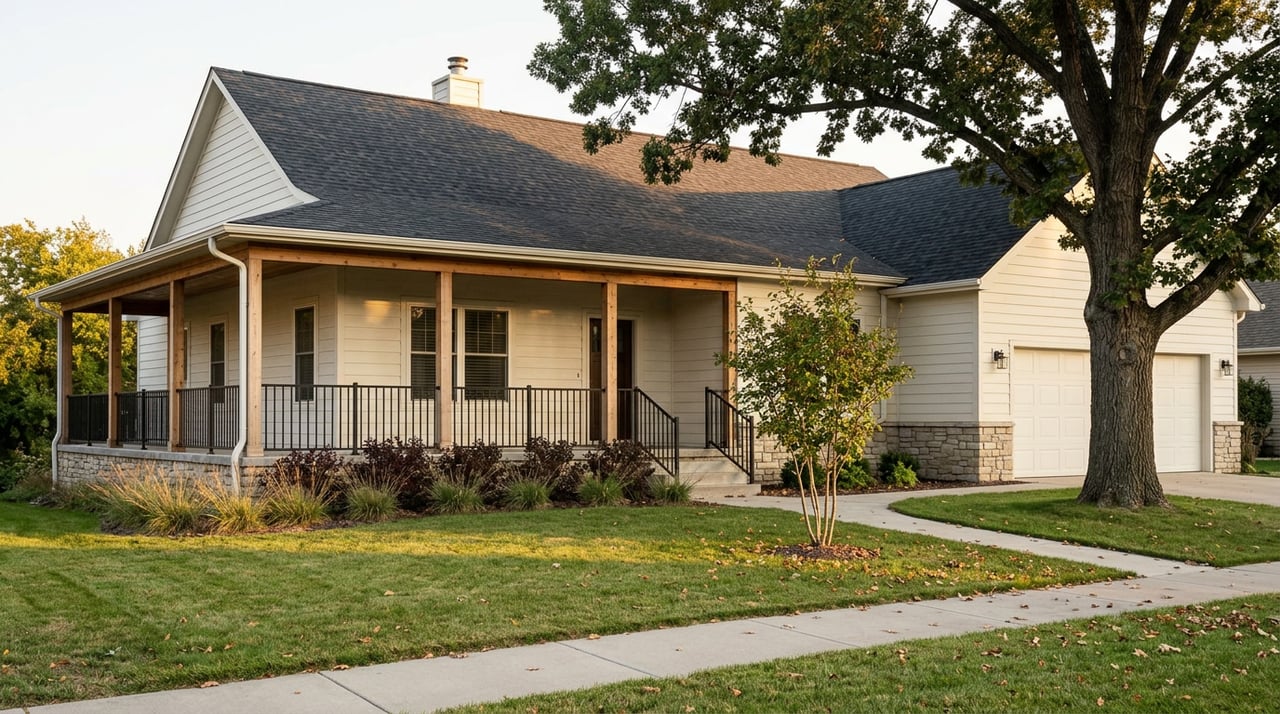
A buyer under contract on an eleven-year-old reverse 1.5-story in Stonegate Reserve did everything right. New-ish build, tidy inspection, no red flags on the walkthrough. Then the radon monitor came back at 4.3 picocuries per liter, just over the federal action level of 4.0. Elsewhere in Overland Park, a 71-year-old bungalow tested at 3.1, comfortably under the line. Same city. Same general geology. Opposite outcomes, and the newer house lost.
That flip in expectations is the thing worth understanding before you sign anything in Overland Park. Buyers tend to assume radon risk tracks with a home's age, the older the foundation, the more cracks, the more exposure. The actual test data from around the metro doesn't support that assumption, and Kansas law gives you almost no room to skip the question either way.
Since July 1, 2009, Kansas has required a specific sentence in every residential real estate contract in the state, whether or not anyone involved believes the house has a radon problem. Under K.S.A. 58-3078a, the language is not optional:
"Every buyer of residential real property is notified that the property may present exposure to dangerous concentrations of indoor radon gas that may place occupants at risk of developing radon-induced lung cancer. Radon, a class-A human carcinogen, is the leading cause of lung cancer in non-smokers and the second leading cause overall. Kansas law requires sellers to disclose any information known to the seller that shows elevated concentrations of radon gas in residential real property. The Kansas department of health and environment recommends all home-buyers have an indoor radon test performed prior to purchasing or taking occupancy of residential real property."
That clause shows up in every deal, from a starter ranch to a new build in a master-planned subdivision. What it does not do is tell you what the test will actually show. Legal Clarity notes that Kansas doesn't require a standardized seller disclosure form the way some states do. The obligation that exists is narrower: disclose known elevated radon if you know about it. Most sellers don't know, because most sellers haven't tested. The clause exists to put the question on the table, not to answer it.
Overland Park sits inside the EPA's Zone 1 radon designation, the agency's highest-potential category, largely because of the glacial geology that runs through northeastern Kansas counties including Johnson County. The Kansas Department of Health and Environment estimates that roughly 40 percent of Kansas homes test above the 4.0 pCi/L action level. That's not a rounding error. It means elevated readings are common enough in this market to show up in inspection reports and need to be dealt with, either through negotiation or mitigation, before closing.
The variation isn't theoretical. Documented radon test results from Overland Park subdivisions show results that don't line up with home age at all:
| Subdivision | Home Age | Test Date | Result (pCi/L) | Above Action Level? |
|---|---|---|---|---|
| Morningview | 62 years, ranch-style | February 14, 2026 | 12.0 | Yes, well above |
| Windham Hill | 31 years, two-story | August 30, 2025 | 6.5 | Yes |
| Stonegate Reserve | 11 years, reverse 1.5-story | April 25, 2026 | 4.3 | Yes, just over |
| Pinehurst (Old Overland Park) | 71 years, bungalow | September 13, 2025 | 3.1 | No |
Read across that table and the pattern breaks the assumption most buyers walk in with. The oldest home in the set, a 71-year-old bungalow, tested clean. An 11-year-old home came in just above the line. Radon moves through soil gas and enters a structure through whatever cracks, sump pits, or slab penetrations exist on that particular lot, on that particular day. It has more to do with what's underneath the house and how the foundation interacts with it than with the decade the house was framed.
This matters most for anyone buying new. It's easy to assume a home built in the last few years already has radon control baked in, especially in a market where builders compete on finish quality and mechanical upgrades. Tygart Media reports that Kansas doesn't require it. There's no statewide mandate for radon-resistant new construction, meaning a passive vent pipe and sub-slab aggregate layer are things a builder chooses to include, not something building code forces on every new slab in Johnson County.
The cost difference is not small once the house is finished. Building radon control into new construction typically runs $350 to $700. Retrofitting a mitigation system into a home that's already built and occupied runs $800 to $2,500. That gap is the reason it's worth asking a builder directly, before you're under contract, whether the plans include a passive radon system. If the answer is no, that's not disqualifying, but it does mean budgeting for a test soon after move-in and treating "new" as no guarantee of a clean result.
In most transactions, the buyer typically orders and pays for the test during the inspection period. If the result comes back elevated, sellers are customarily expected to cover the mitigation system, or to credit the buyer at closing so the buyer can have it installed. It's negotiated, which means it can go differently depending on how the offer is written and how much leverage either side has going into the inspection period.
That's the practical reason to raise radon early rather than letting it surface as a surprise addendum days before closing. A test ordered in the first days of an inspection period gives both sides time to negotiate calmly. A test that comes back the day before a financing deadline turns a routine air quality reading into a source of last-minute leverage nobody planned for.
A few habits keep this from becoming a fire drill:
Does Kansas require a standard seller disclosure form for radon? No. Kansas doesn't mandate a statewide disclosure form the way some states do. The contract language under K.S.A. 58-3078a is mandatory and appears regardless of what the seller does or doesn't know; sellers must also disclose known elevated radon.
If a home already has a mitigation system installed, do we still need to test? Yes. A working system should keep levels low, but retesting confirms it's functioning, and most buyers still want current data rather than relying on a system that could be years old.
Can I use a DIY radon kit instead of hiring a technician? You can for personal peace of mind, but Kansas real estate transactions typically rely on results from a state-certified radon measurement technician, since that's the standard most sellers, buyers, and lenders will accept as reliable.
Does a low result on one part of the lot mean the whole house is fine? Not necessarily. Radon levels can vary between a finished basement and other parts of a home, which is part of why professional placement of monitors matters more than a single reading from a hardware store kit.
If you're getting ready to buy or sell in Overland Park and want to think through how a radon result might affect your negotiating position before you're staring at one, Kirk Home & Land can walk through the specifics with you. Schedule a consultation to discuss your land or home opportunity, and we'll help you get ahead of the parts of the contract that catch people off guard.
This article is general information, not legal, tax or financial advice. Consult a qualified professional about your situation.
Stay up to date on the latest real estate trends.



Kirk Home & Land true advocacy and full-service resources that markedly result in each client accomplishing their real estate goals. Their warm and trusted Midwest values and attributes shine through, and it is truly their joy to ultimately fulfill their client's request throughout the transaction.