Leawood Home Prices: Why the Same Median Hides Two Different Purchases
August 13, 2026
August 13, 2026
A buyer we talked with this spring found a mid-century ranch on Lee Boulevard, the kind of tree-shaded street that defines Old Leawood, and assumed the math was straightforward. Tear down the existing structure, build the five-bedroom home the family actually wanted, done. Then the city's development ordinance entered the picture. The size of the new house wasn't simply a function of the lot's deed dimensions. It was tied to a formula that measures the lots around it, and a height rule that starts its calculation at the front door rather than the highest point of the property. The buyer wasn't just purchasing a piece of land. They were purchasing whatever that formula happened to allow on that particular street, on that particular day.
That distinction is the thing Leawood's median home price doesn't tell you. When you see a headline number, whether it's the $709,000 median Redfin reported for March 2026 or the $777,052 single-family median PropertyFocus tracked as of April 2026, you're looking at an average of two fundamentally different products sharing a city limit. One is a house being sold as shelter. The other is a homesite being sold as a redevelopment right, priced according to what the city's ordinance will let a builder put on it. Confusing the two is how a buyer ends up disappointed by a house that looked identical to the one three streets over but commanded a very different price, or how a seller underprices a torn-down-ready lot because they priced the structure instead of the entitlement sitting under it.
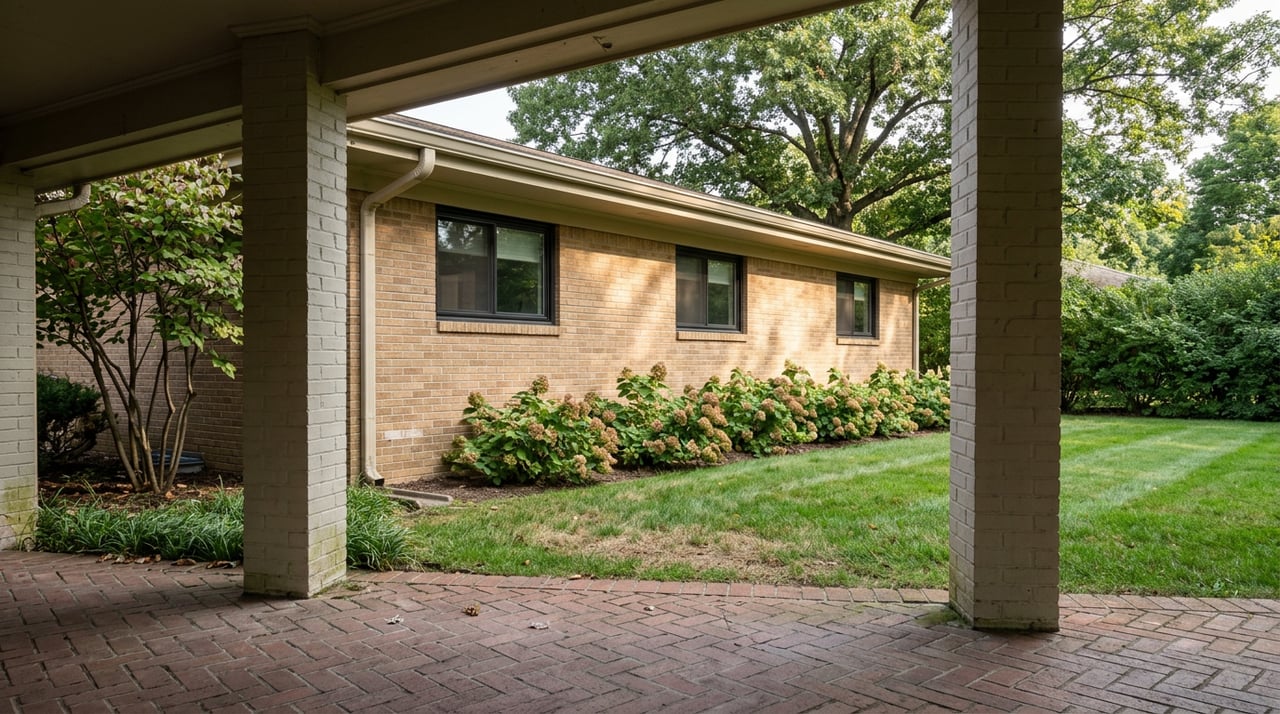
Leawood splits cleanly along construction era, and that split explains more about price than square footage does. Homes inside the I-435 loop, in what locals call Old Leawood, were built mostly in the 1940s through 1960s along streets like Lee Boulevard and Somerset Drive near the Mission Road corridor. Newer construction, in subdivisions like Camden Woods, Aventino, Siena, Regents Park, and East Village, has continued from the 1980s forward into today's market. New builds in those neighborhoods typically start in the $750,000s and climb well past $2 million.
Those two markets don't behave the same way. A 1960s ranch in Old Leawood might list near or even below the city median, but a meaningful share of its value has nothing to do with the house standing on it. It's the lot, the location, and the redevelopment potential a builder can unlock. Meanwhile a newer home in Aventino or Siena is priced almost entirely on the structure itself, because there's no teardown math involved. Blend those two pricing logics into one citywide median and you get a number that describes neither market particularly well.
Here's the part that catches buyers off guard. Leawood's development ordinance ties minimum lot size in some residential districts to the greater of 15,000 square feet or the average of all lot sizes within 300 feet of any lot line, capped at one acre. In practice, this means your buildable footprint isn't determined solely by what you own. It's determined by what your neighbors own, averaged out across a 300-foot radius.
The height rule is stranger still. For rebuilt or remodeled dwellings, the maximum exterior wall height at the side-yard setback is 23 feet, measured from the front door elevation, with additional height allowed for each additional foot of setback up to a 30-foot cap. Full ordinance language is available through the City of Leawood's codes and ordinances page.
The starting point for how tall your new house is allowed to be isn't the ground. It's your own front door.
That single detail changes how a buyer should evaluate a teardown lot. Two properties with identical square footage on the tax rolls can support very different homes depending on where the front door sits relative to grade, and depending on what the neighboring lots average out to. A lot's real value in Old Leawood isn't fully knowable from the listing sheet. It requires someone who understands how the ordinance actually calculates buildable space.
Vacant infill parcels in Leawood are close to gone. The city's overall land area is roughly 75 percent developed, which means the supply of open lots that used to feed new construction has largely dried up. What's replaced it is a small, active cohort of builders who specialize in exactly this kind of project. Koenig Building + Restoration has focused on residential teardown and rebuild work in Prairie Village, Fairway, and Leawood since 2010. J.S. Robinson Fine Homes builds new custom homes specifically on teardown lots in Old Leawood, within the Shawnee Mission school district. Dusty Rhodes Homes and Starr Homes both work the same niche, evaluating existing homesites for redevelopment rather than waiting on new subdivisions that mostly no longer exist.
That concentration of specialized builders is itself a signal. When a market shifts from new-subdivision construction to teardown-and-rebuild as its primary growth path, the professionals who know how to price a lot's potential become more valuable than the ones who know how to price a finished house. If you're evaluating an older Leawood property with any intention of rebuilding, get someone who understands setbacks, easements, and buildable area involved before you write an offer, not after.
Leawood updated its street tree ordinance on June 16, 2025. Under the revised rules, any property owner building new, remodeling, or removing a tree in the public right-of-way must obtain a Right-of-Way permit before that tree comes down, and a replacement plan is required as part of the approval. This applies to every property in the city, including a homeowner planning a teardown who assumes the mature oak at the curb is simply in the way.
The city takes tree preservation seriously enough that the numbers can get large at scale. A separate ordinance, aimed at commercial-scale development, requires builders to inventory and in many cases replace trees over a certain caliper size. When a development attorney raised concerns about the proposed Reserve at Ironhorse townhome project in late 2024, he estimated the cost of complying with that replacement requirement at roughly $100,000, according to reporting from the Johnson County Post. That figure applies to commercial-scale development rather than a single-lot teardown, but it illustrates how far the city is willing to go to protect its canopy, and why a rebuild project involving significant tree removal deserves a permit check before demolition, not a surprise after.
If you're comparing Leawood to another Johnson County suburb using the median price alone, you're missing the variable that matters most for this particular city. Before you treat a listing price as comparable to another one, ask:
A $700,000 ranch on a large Old Leawood lot and a $700,000 new build in Regents Park are not the same investment, even though the portal listing might make them look interchangeable. One is a finished product. The other is raw material with a ceiling set by a formula most buyers never see until they're already under contract.
Does the 300-foot lot-averaging rule apply everywhere in Leawood, or just older neighborhoods? It applies within specific residential zoning districts under the city's development ordinance, and Old Leawood's older, larger lots tend to be the areas where it most affects rebuild potential, since the averaging calculation pulls from whatever lot sizes already exist nearby.
If I'm remodeling rather than tearing down completely, do the same height and setback rules apply? The ordinance specifically addresses rebuilt and remodeled dwellings, so yes, a substantial remodel can trigger the same height calculation as new construction. Confirming this before finalizing architectural plans avoids a redesign mid-project.
How do I find out what a specific lot can actually support before making an offer? This is where local experience matters more than a listing description. Confirming buildable area involves checking the 300-foot lot average, the front-door elevation calculation, easements, and any tree-related permit requirements, all before the inspection period closes.
Leawood's price tag has never been a mystery. What it's actually pricing, house or homesite, is the part worth getting right before you make an offer. If you're weighing an Old Leawood teardown against newer construction elsewhere in the city, or trying to figure out what a specific lot can really support, Kirk Home & Land can walk through the ordinance math with you. Schedule a consultation to discuss your land or home opportunity before you commit to either side of this market.
Stay up to date on the latest real estate trends.



Kirk Home & Land true advocacy and full-service resources that markedly result in each client accomplishing their real estate goals. Their warm and trusted Midwest values and attributes shine through, and it is truly their joy to ultimately fulfill their client's request throughout the transaction.